

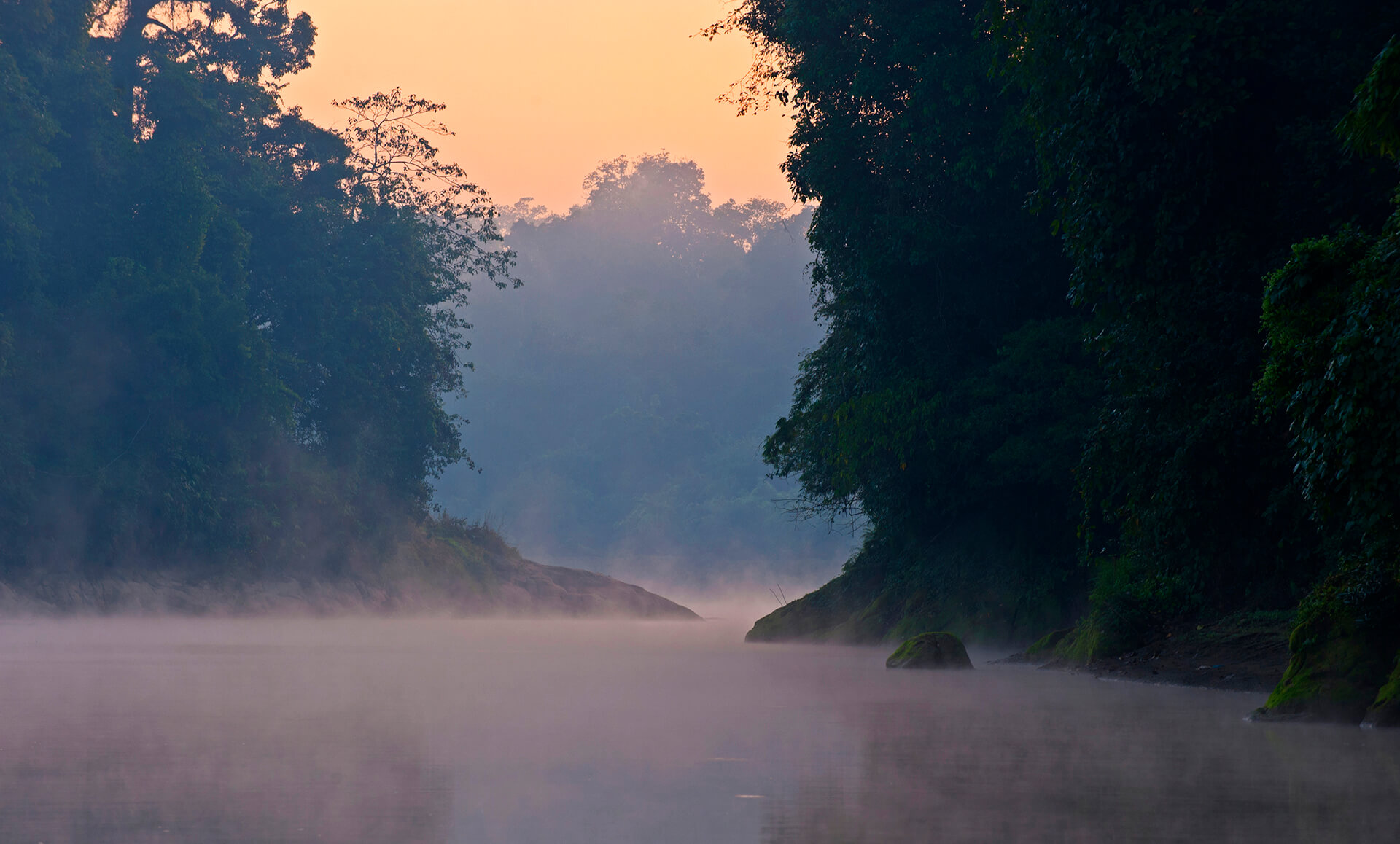
For the past week, amidst the heated news of #COVID19 and the Super Cyclone Amphan, there is another piece of news that has emerged, one that was actually published a month ago. It seems to have been forcibly injected into the public discourse to harp on a new political agenda among netizens.
The news is about Dihing Patkai and the coal mining that has been ongoing in the region since British times, dating back to 1884. A clearance from NBWL for Coal India to continue coal mining in the Saleki Proposed Reserve Forest, Margherita has sparked controversy and protests aimed at saving the "Amazon of the East" from coal mining.
Dihing Patkai, The Amazon of the East
Dihing Patkai is a rainforest area, also known as "The Amazon of the East," encompassing 937 sq km of lowland tropical rainforest spread across northeastern Assam and Arunachal Pradesh. It also includes the Dihing Patkai Elephant Reserve, which is the primary focus of the protests.
However, this is not the first time authorities have permitted coal mining. The history of mining in the Dihing Patkai region can be traced back to 1884, during British times. Even Digboi, known as the Oil City of Assam, is part of the Dihing Patkai Elephant Reserve.
Coal Mining Post-Independence
Coal mining continued after independence. In 1973, during Indira Gandhi's tenure, the Central Government approved coal mining for 30 years over an area of 98.59 hectares.
The license expired in 2003, but illegal mining has continued in the Dihing Patkai region since then. The Northeastern Coal Fields have admitted to engaging in illegal coal mining since 2003, which went largely unnoticed.
It was the Sarbananda Sonowal Government that first took action on this matter, imposing a fine of Rs. 43.25 Crores on Coal India for not renewing the mining license in the Dihing Patkai region. They also took action against State and Coal India officials.
Later, the mining companies sought permission from the Modi Government, but the proposal was rejected. A committee was set up with ecologists and foresters to report on the matter. Investigations are ongoing to find and punish the culprits. This debunks the claim that the Modi Government approved coal mining. Even Nature's Beckon founder Soumyadeep Dutta, a renowned environmentalist from the Northeast, debunked this propaganda. He released a video message ensuring that Dihing Patkai is safe, though he faced severe backlash on social media.
<iframe width="560" height="315" src="https://videopress.com/embed/8bfSARMz" frameborder="0" allowfullscreen></iframe><script src="https://videopress.com/videopress-iframe.js"></script>
In this video, which is in Assamese, Dutta assures that "Dihing Patkai is completely safe and neither the state government nor the central government has any plans for coal mining activity inside the sanctuary premises." He also thanked the people of Assam for their proactive role and concern.
Who is Soumyadeep Dutta?
Soumyadeep Dutta is a renowned environmentalist based in Assam. Through his organization, Nature’s Beckon, he initiated grassroots movements in the region and is a pioneer of various biodiversity conservation efforts. Nature’s Beckon pledged to protect 500 sq km of pristine tropical rainforest in Dihing Patkai. Due to their efforts, the Assam government declared 111.19 sq km of the rainforest as Dihing Patkai Wildlife Sanctuary in 2004.
Are These Environmental Concerns Politically Motivated?
The entire episode raises questions about whether these environmental concerns are genuine or politically influenced, similar to the Aarey Forest issue in Maharashtra. If the concerns were genuine, why did they react negatively to Soumyadeep Dutta’s clarification? The NBWL approved the continuation of coal mining in April, and The Hindu published the news on April 24th. It took a month for the ‘spontaneous’ outrage to surface, notably after Dhruv Rathee posted about it on May 16th.
Another factor suggesting a political motive is the involvement of individuals like Dhruv Rathee, Abhishek Mishra, and Dia Mirza, who previously participated in the Aarey Forest protests. This seems like an attempt to destabilize and create a narrative among those unfamiliar with the issue, potentially setting the stage for AAP in the Northeast.
Traces of Money Laundering Through the Novel Cause
Northeastern states are vulnerable to money laundering, used for various illegal activities and influencing people. Such causes can facilitate money laundering to empower certain elements. Recently, Greta Thunberg’s organization, Friday for Future, opened a branch in Guwahati, potentially channeling funds into the region.
This organization also joined the protest, using typical fancy placards and campaigning videos, often promoted by PR teams to influence kids and students. They were caught using a Shutterstock image, claiming it depicted Dihing Patkai.
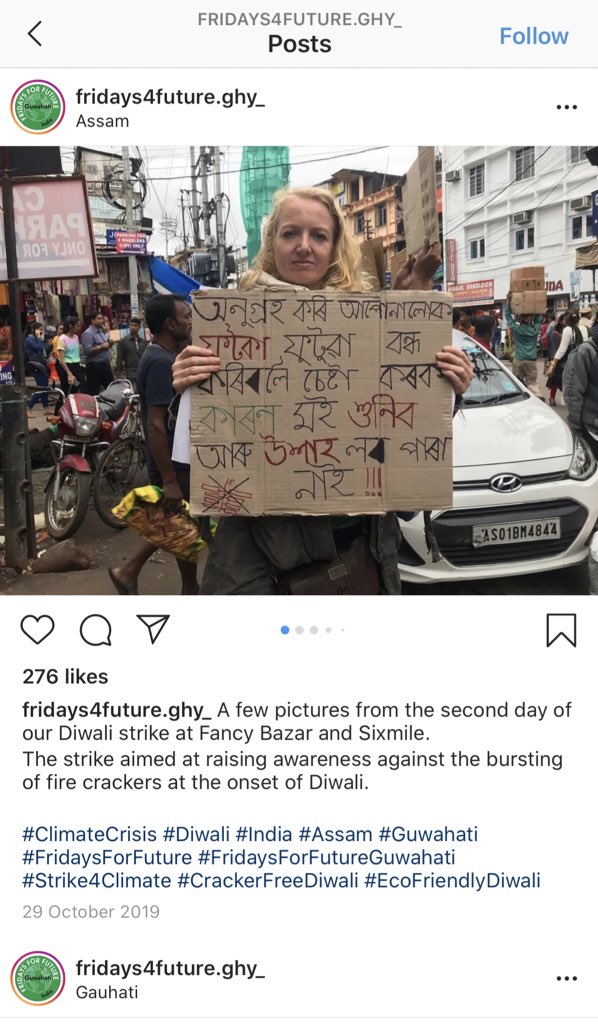
Friday for Future’s Guwahati branch violated visa norms by involving foreigners in the protest in Assam.
Concluding Notes
Coal mining in the region is not new; it has been ongoing for centuries. The NBWL approved mining in a site 25 km southeast of Burhi Dihing and Dihing Patkai Elephant Reserve is in the northwest.
The entire controversy stems from the ongoing protest against the NBWL clearance for Coal India Ltd. to continue mining in the Saleki Proposed Reserve Forest, Margherita. The Dihing Patkai Elephant Reserve is a term denoting an extended landscape including forest lands and human-inhabited areas. Present-day Digboi town is within the Elephant Reserve.
Coal mining has been part of the anthropogenic activities in this area. While it is true that part of the landscape has been extensively damaged due to mining, NBWL approved mining in a patch where it has been conducted for years. The controversy appears to be a politically motivated issue rather than a genuine environmental concern.
The extracts are taken from Voice of Assam for better insight.
(Cover Image Credit: Round Glass)