

Gujarat has no shortage of places that attract travellers. From the white desert of Kutch to the historic streets of Ahmedabad, the state offers everything from architectural marvels to wildlife sanctuaries. But hidden among the agricultural fields of Gujarat is a place that rarely makes it into conventional travel itineraries.
A place where ships may once have arrived carrying goods from distant lands. Where craftsmen transformed ordinary stones into beautiful ornaments. Where merchants conducted business long before modern currencies, shipping containers, or international trade agreements existed.
Welcome to Lothal, one of the most fascinating archaeological sites of the Indus Valley Civilisation.
Located approximately 80 kilometres from Ahmedabad, Lothal is an ancient Harappan settlement best known for its remarkable town planning, bead-making industry, and a massive brick-lined structure widely identified as an ancient dockyard.
At first glance, the archaeological site might not look particularly impressive. There are no towering monuments, elaborate palaces, or magnificent temples waiting to greet visitors. What remains are brick foundations, excavated structures, and the traces of a settlement that flourished thousands of years ago.
But that is precisely what makes Lothal interesting.
Unlike many historical destinations where architecture tells most of the story, Lothal requires a little imagination. And once its history begins to unfold, those seemingly ordinary bricks reveal an extraordinary chapter of human civilisation.
Lothal: A Brief Introduction
The name Lothal is commonly interpreted as the Mound of the Dead, a name associated with the Gujarati words loth and thal.
The settlement flourished during the Harappan period, particularly around the third and second millennia BCE, when the Indus Valley Civilisation developed sophisticated urban centres across parts of present-day India and Pakistan.
While cities such as Harappa and Mohenjo-daro are better known, Lothal occupies an important place in the history of ancient trade and maritime activity.
Its location near the Bhogava River and the Gulf of Khambhat provided access to waterways that may have connected the settlement with wider trading networks.
Today, the sea is far from the archaeological remains, and the surrounding landscape looks nothing like a busy port. Yet thousands of years ago, the geography of this region was considerably different.
Fun fact: Lothal's importance lies not merely in its age but in the evidence of an organised urban economy. Archaeologists uncovered structures associated with manufacturing, storage, drainage, and trade—activities that remain essential to modern cities.
The Discovery of Lothal
For centuries, the remains of Lothal lay buried beneath the soil of Gujarat.
The site was identified by the Archaeological Survey of India in 1954, and excavations began in 1955 under archaeologist S. R. Rao.
These excavations revealed a planned settlement with streets, houses, drainage systems, industrial areas, a warehouse, and the large basin that would become Lothal's most famous feature.
What makes this discovery remarkable is the extent to which the surviving foundations help archaeologists reconstruct everyday life in the ancient town.
Lothal was not simply a collection of houses. It was a functioning settlement with evidence of specialised industries, commercial activity, and considerable engineering knowledge.
The Ancient Dockyard: Lothal's Biggest Attraction
Imagine visiting a port today.
There would be cargo ships, cranes, warehouses, loading platforms, and a seemingly endless movement of goods.
Now imagine a similar commercial ambition more than 4,000 years ago.
That is the fascinating possibility presented by Lothal.
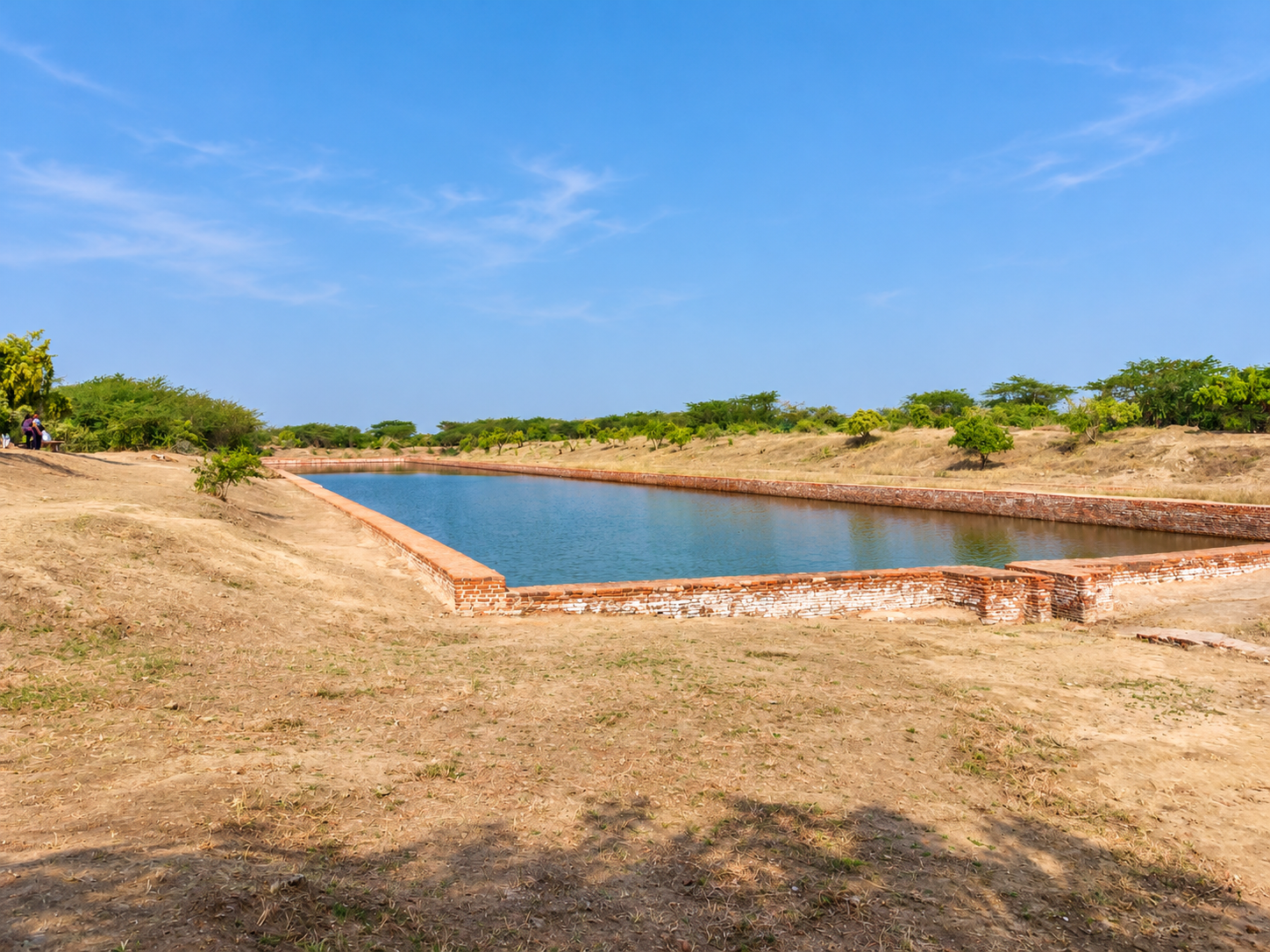
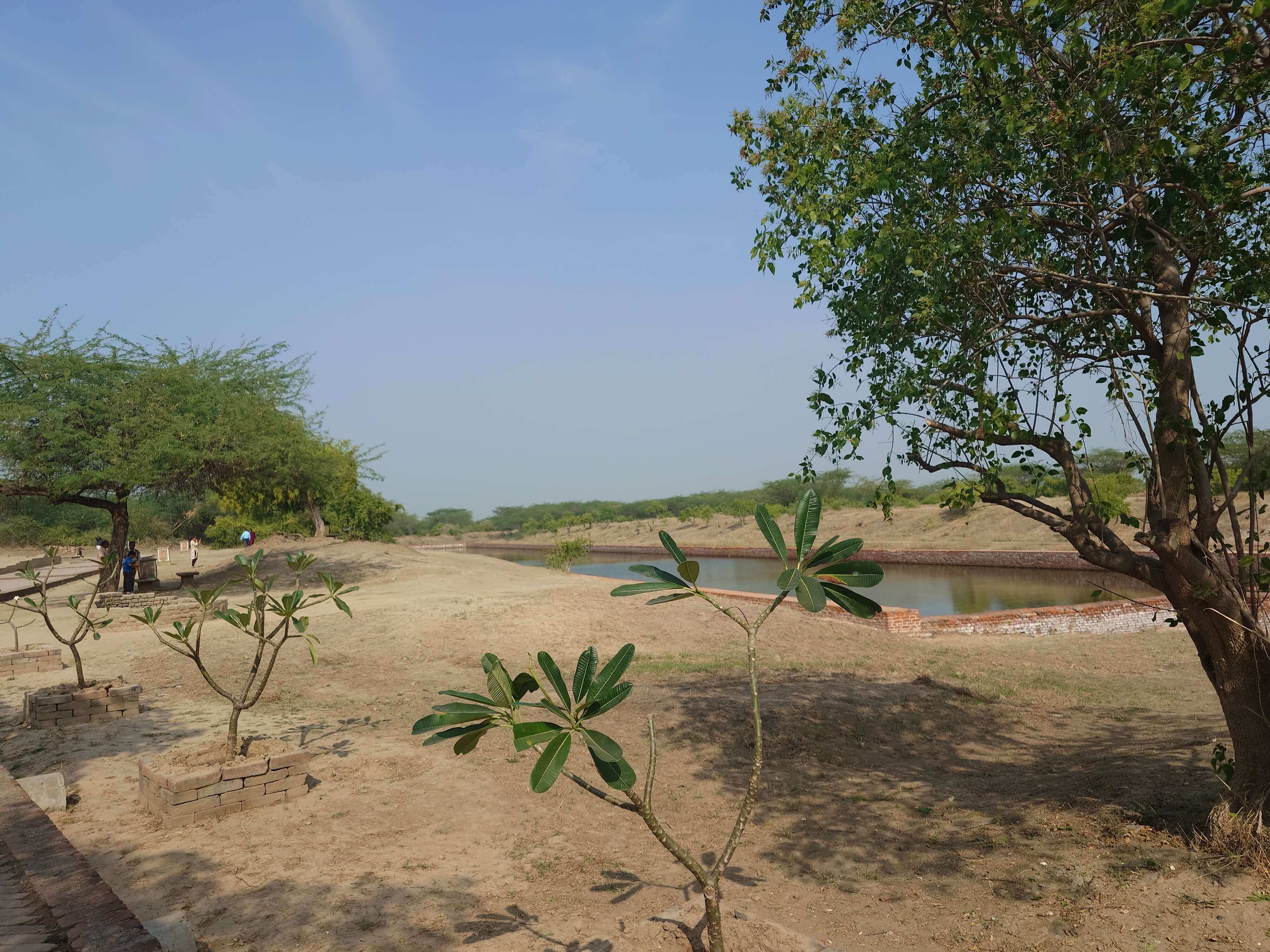
The settlement's most distinctive archaeological feature is an enormous rectangular basin built with baked bricks. It is widely interpreted as a tidal dockyard, potentially used to accommodate vessels travelling through the ancient waterways connected to the Gulf of Khambhat.
Researchers have identified features interpreted as water-control arrangements, including inlet and outlet channels.
The proposed dockyard would have required an understanding of water levels, construction materials, and the movement of goods.
That is an impressive engineering proposition for such an early period.
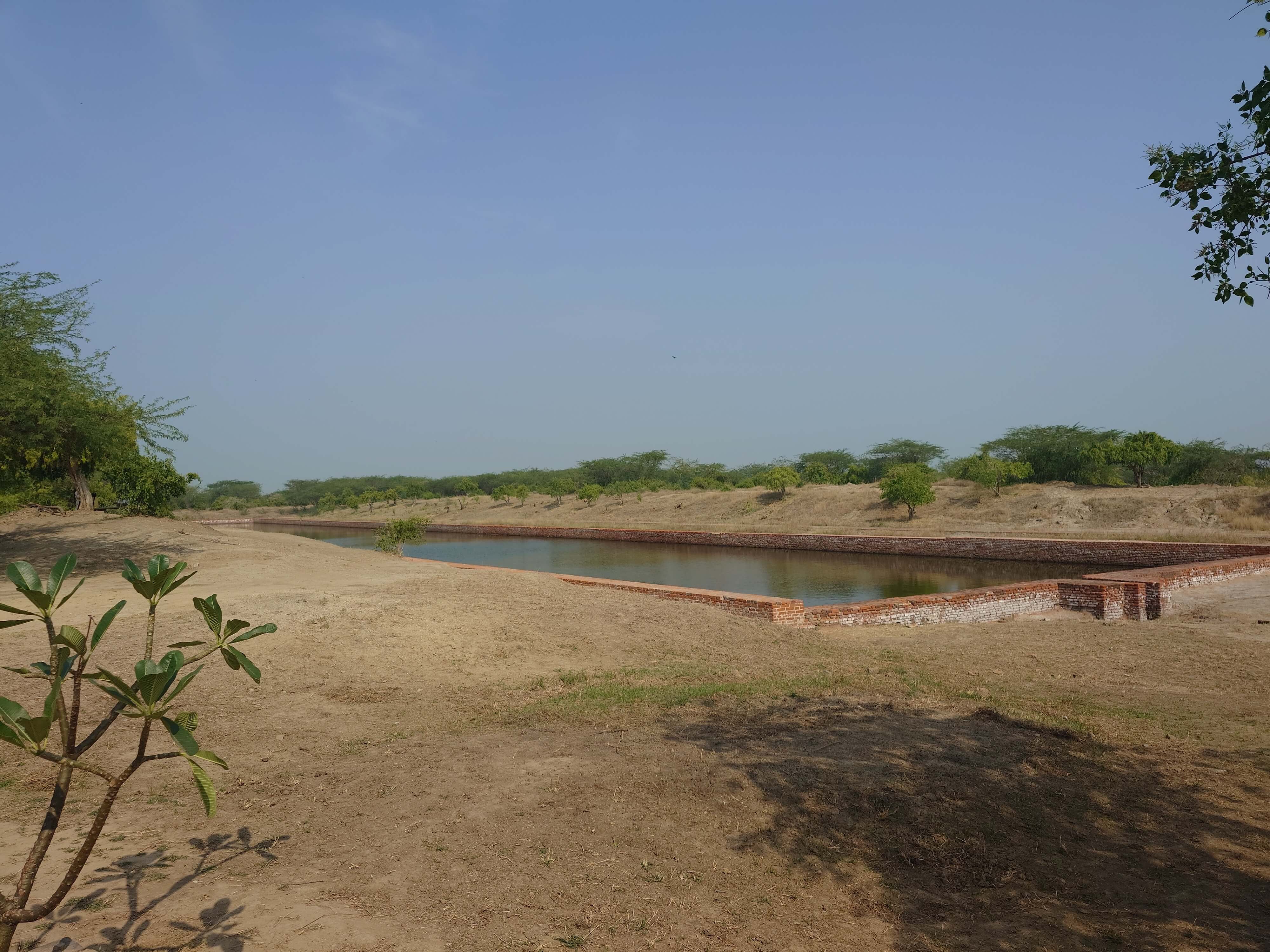
However, there is an important detail that travellers should know: the dockyard interpretation is not universally accepted.
Some archaeologists have suggested that the structure may have served as a reservoir or another water-management facility. Its precise function remains a subject of scholarly debate.
This uncertainty does not make the site less interesting. Quite the opposite.
Standing before a structure that has prompted decades of archaeological discussion offers an opportunity to understand how history is reconstructed—and sometimes contested—from the evidence left behind.
A Trading Town Connected to the Ancient World
One of the most intriguing aspects of Lothal is its association with long-distance trade.
Archaeological discoveries at Harappan sites indicate that the civilisation maintained commercial connections with regions around the Persian Gulf and Mesopotamia.
Mesopotamia, located largely in present-day Iraq, was home to some of the world's earliest urban civilisations.
Ancient Mesopotamian records refer to a distant trading region called Meluhha, which many scholars associate with the Indus civilisation.
Lothal's position within the Harappan network, combined with the discovery of seals, beads, shell objects, and other trade-related material, makes it particularly important for understanding these connections.
The settlement appears to have been more than a place where goods changed hands.
It was also a centre of production.
Imagine merchants negotiating exchanges, craftspeople preparing ornaments, and goods being organised for journeys to distant markets.
There were no digital payments, online marketplaces, or modern logistics systems. Yet these early communities developed methods of measurement, storage, manufacturing, and exchange.
Perhaps international trade is not such a modern invention after all.
The Warehouse: Where Ancient Commerce Took Shape
Close to the large basin are the remains of a structure identified as a warehouse.
Archaeologists interpret it as a storage facility that may have been used to organise goods associated with the settlement's commercial activities.
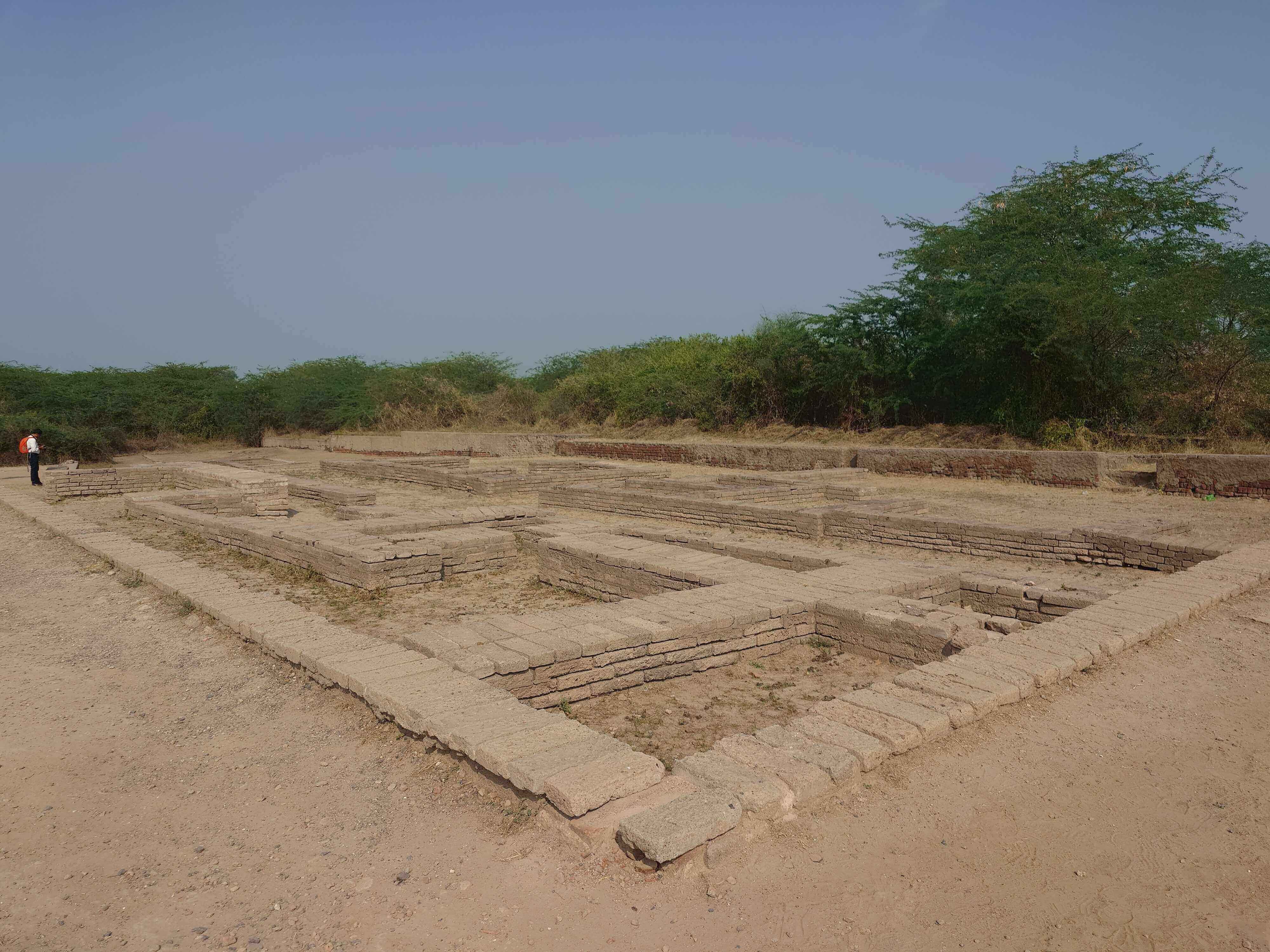
The surviving remains indicate a raised platform and an arrangement of storage blocks.
The discovery of sealings in this area is especially significant. Such objects may have been used to secure or identify packages and goods.
Although the original structure has largely disappeared, its foundations offer clues about how the Harappans managed their supplies.
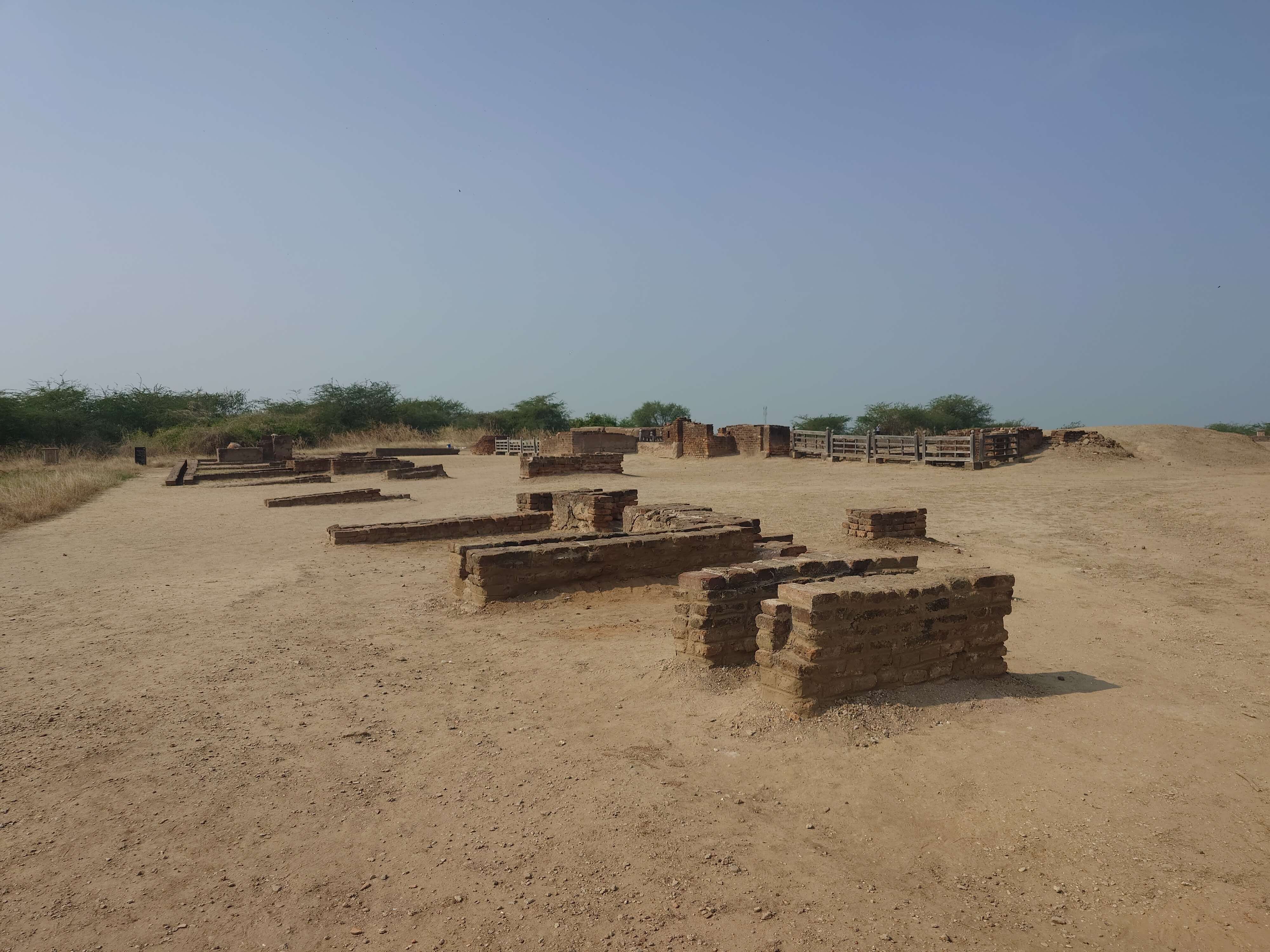
The warehouse also illustrates an important point about Lothal.
The town's sophistication was not limited to monumental engineering. It extended to the everyday practicalities of running a commercial settlement.
Goods had to be manufactured, measured, stored, identified, and transported.
Somebody had to keep everything organised.
Apparently, logistics departments have a very long history.
The Bead Factory: A Glimpse into Harappan Craftsmanship
Not everything about Lothal revolves around ships and trade.
The settlement was also an important centre of bead-making and craftsmanship.
Archaeologists discovered evidence of workshops where artisans produced beads from materials such as carnelian and agate.
These were not simply stones collected and threaded together.
Producing decorative beads required several stages of work, including shaping, drilling, polishing, and sometimes heat treatment to achieve particular colours.
The precision involved becomes especially interesting when considering the tools available thousands of years ago.
The finished products could be used as jewellery or exchanged through commercial networks.
The bead-making industry provides a more personal connection to the people who lived here.
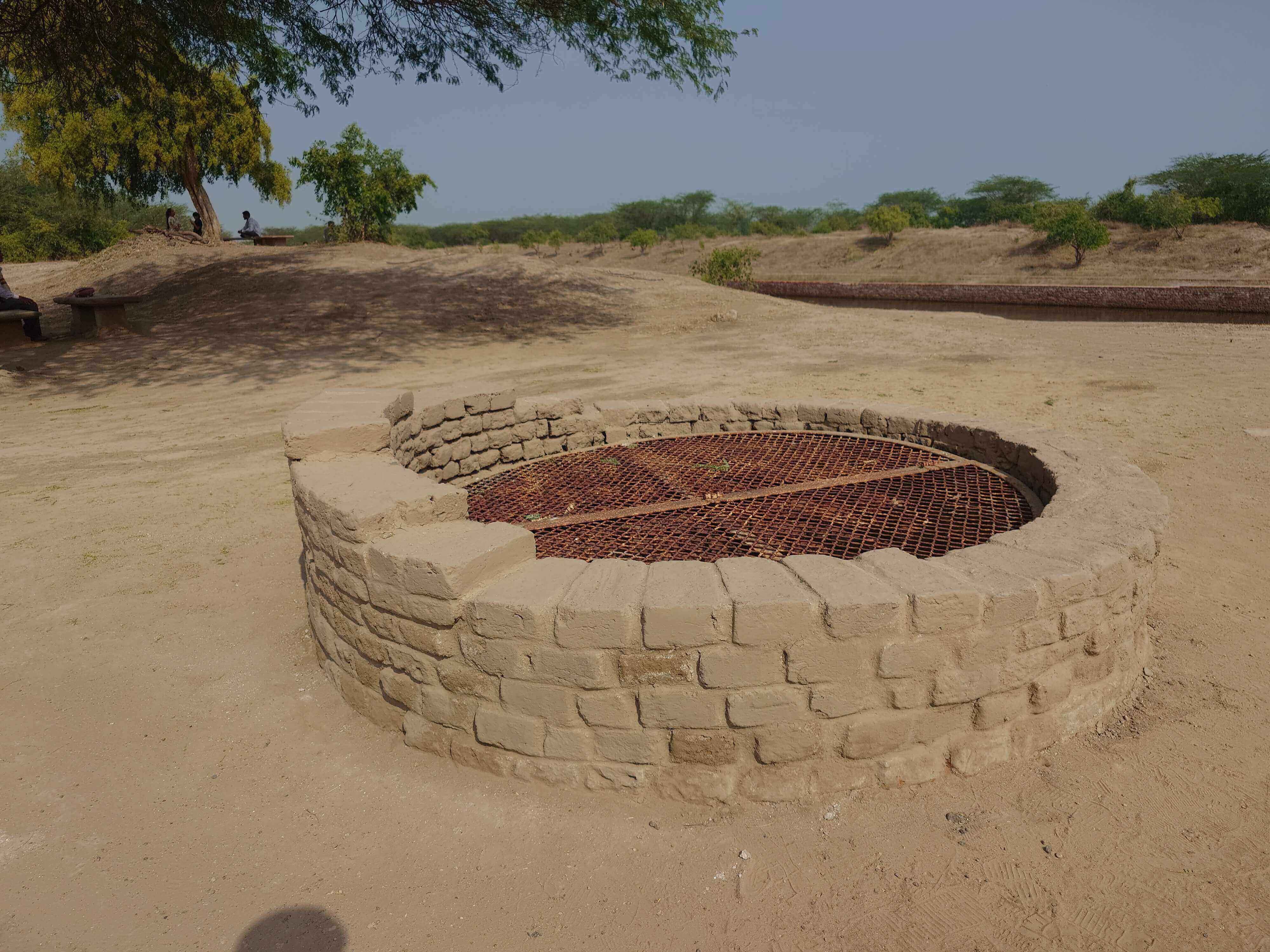
Large structures reveal how a town was organised. Small objects reveal something about the people themselves—their skills, preferences, creativity, and sense of beauty.
After all, even ancient civilisations appreciated a good accessory.
Town Planning That Was Ahead of Its Time
One of the defining characteristics of the Indus Valley Civilisation was its approach to urban planning.
Lothal reflects several features associated with Harappan settlements.
The town was divided into distinct areas, including an elevated section commonly referred to as the acropolis and a lower town containing residential and industrial structures.
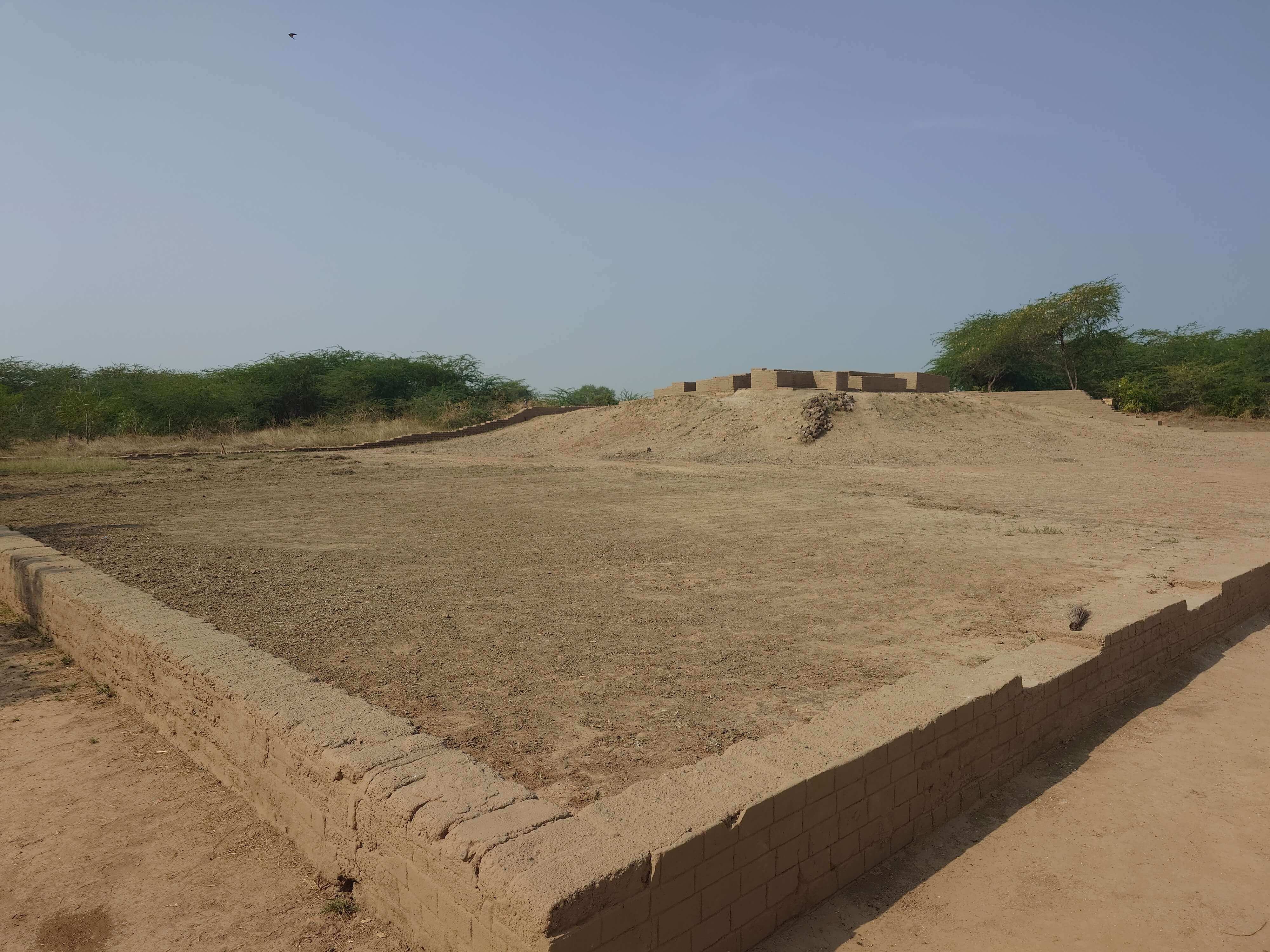
The remains indicate organised streets, brick-built houses, and drainage arrangements.
Water management was particularly important in a settlement exposed to seasonal flooding and changing environmental conditions.
The use of standardised bricks and carefully constructed drains suggests a society that valued consistency and practical engineering.
These features may not be as visually dramatic as the monuments of later Indian dynasties, but they tell an equally important story.
Civilisation is not measured only by the size of its palaces.
Sometimes, a properly functioning drainage system is an achievement worth celebrating.
Pottery, Tools, and Everyday Life
It is easy to become fascinated by Lothal's large structures and forget that this was once a place where ordinary people lived.
Families prepared meals, artisans worked, children played, and traders conducted their daily business.
Archaeological discoveries help fill in parts of that picture.
Excavations have revealed pottery, terracotta objects, copper implements, stone tools, ornaments, seals, weights, and other material associated with everyday activities.
The pottery is particularly interesting because it reflects both practical needs and artistic expression.
Some vessels were intended for storage or domestic use, while decorated examples demonstrate the craftsmanship of Harappan potters.
Standardised weights provide further evidence of organised exchange and measurement.
These objects might seem modest compared with royal treasures displayed in museums, but they are invaluable for understanding how an ancient society functioned.
A beautifully decorated pot tells one story.
A carefully shaped tool tells another.
Together, they help reconstruct a world that disappeared thousands of years ago.
What Do the Burial Sites Tell Us?
Lothal also contains evidence of burial practices.
Archaeologists uncovered a cemetery with human burials, offering insights into the funerary customs of the settlement's inhabitants.
Burial practices are especially valuable to archaeologists because they may reveal information about social traditions, cultural beliefs, and relationships within a community.
However, interpreting ancient burials is rarely straightforward.
The presence or absence of particular objects does not always provide a clear explanation of what people believed about death.
Much about the spiritual life of the Harappans remains uncertain.
Their writing system has not been conclusively deciphered, leaving important questions about their language, administration, and beliefs unanswered.
It is a reminder that even after decades of excavation, the Indus Valley Civilisation continues to hold many secrets.
What Happened to Lothal?
Lothal did not remain a thriving settlement forever.
Archaeological evidence suggests that the town experienced flooding and environmental changes that affected its development.
Over time, its urban and commercial importance declined as the wider Harappan world underwent major transformations.
The reasons behind the decline of Indus cities remain complex and are still debated.
Changing river systems, environmental pressures, shifts in trade, and transformations in settlement patterns likely played different roles across different regions.
It would therefore be misleading to attribute Lothal's decline to one dramatic event.
The town changed gradually, and its later phases differed from the period when its commercial activity was at its height.
Eventually, the settlement was abandoned, its structures deteriorated, and much of its history disappeared beneath the ground.
Until archaeology brought it back into view.
Is Lothal Worth Visiting?
That depends on what kind of traveller you are.
If the idea of a memorable destination involves grand monuments, elaborate interiors, scenic viewpoints, and impressive photo opportunities, Lothal might initially feel underwhelming.
Most of the surviving structures are low brick foundations. There are no restored Harappan houses to walk through, and the ancient port no longer resembles a waterfront.
But if archaeology, ancient civilisations, or lesser-known destinations interest you, Lothal is absolutely worth considering.
Its appeal lies in understanding what once existed rather than admiring what still stands.
The interpretation boards and site layout are particularly useful because they help visitors connect the excavated remains with the settlement's original purpose.
A little background reading before visiting makes an enormous difference.
Without context, Lothal may appear to be an assortment of old bricks.
With context, it becomes a window into the engineering, trade, and daily life of a civilisation that flourished four millennia ago.
How to Reach Lothal from Ahmedabad
Lothal is located roughly 80–85 kilometres southwest of Ahmedabad, making it a feasible day trip from the city.
By Car or Taxi
A private car or taxi is the most convenient option for visitors who prefer a comfortable journey.
Depending on the starting point, traffic, and road conditions, the journey generally takes around two hours.
By Motorcycle or Scooter
Travelling by motorcycle or scooter is another way to explore the countryside between Ahmedabad and Lothal.
The route passes through stretches of rural Gujarat, making the journey a pleasant alternative to a conventional city excursion.
A two-wheeler also provides greater flexibility for stopping along the way.

However, travellers should account for the distance, road conditions, heat, and limited facilities on some rural stretches.
Travel tip: Carry sufficient drinking water, use sun protection, and refuel before heading towards the more remote sections of the route.
By Public Transport
Reaching Lothal by public transport is less straightforward than visiting popular destinations around Ahmedabad.
Local transport connections may require additional arrangements for the final stretch.
Travellers relying on buses or shared vehicles should verify current services and return options before leaving Ahmedabad.
For a short day trip, private transport is generally the simpler choice.
Best Time to Visit Lothal
The most comfortable period to explore Lothal is generally November to February, when Gujarat experiences relatively pleasant winter weather.
The archaeological remains are largely exposed, with limited protection from direct sunlight.
Summer temperatures can make walking around the site uncomfortable, particularly during the afternoon.
The monsoon brings a different set of challenges, including humidity and the possibility of muddy ground.
An early start is recommended, especially for travellers combining Lothal with other destinations around Ahmedabad.
How Much Time Is Needed?
Allow approximately 1.5 to 2.5 hours to explore the archaeological site and study the available interpretation material at a comfortable pace.
Travellers with a strong interest in archaeology may want additional time.
Since Lothal is outside Ahmedabad, it is sensible to reserve most of the day for the return journey and any planned stops.
Opening hours, museum access, and visitor facilities can change, so confirm the latest arrangements before travelling.
Things to Know Before Visiting Lothal
Lothal is an archaeological destination rather than a conventional tourist attraction, and expectations should reflect that.
- Read the interpretation boards. They are essential for understanding the ruins and the site's historical significance.
- Do not expect monumental architecture. Most structures survive only as foundations.
- Carry water and basic essentials. Facilities around the archaeological area may be limited.
- Wear comfortable footwear. Exploring an open excavation site involves walking on uneven surfaces.
- Avoid the midday heat. There is limited shade across parts of the site.
- Respect the archaeological remains. Do not climb on fragile structures, remove objects, or disturb protected areas.
- Check museum and site access in advance. Do not assume every facility will be open on the day of your visit.
Lothal and the Future of India's Maritime Heritage
Lothal has also been selected as the location for the National Maritime Heritage Complex, an ambitious project intended to present India's long maritime history.
The project reflects growing interest in the country's ancient seafaring traditions and the role of settlements such as Lothal in early commercial networks.
It is important, however, to distinguish the modern heritage development from the original archaeological remains.
The ancient Harappan settlement is the reason Lothal matters. New visitor facilities may eventually make that history more accessible, but they are not a substitute for understanding the site itself.
Final Thoughts: A Place That Deserves More Attention
India's history is often presented through its grand forts, magnificent temples, and royal palaces.
But the story of the subcontinent began long before many of those monuments were built.
Lothal belongs to that much older world.
It tells the story of people who constructed organised settlements, developed specialised crafts, exchanged goods across distant regions, and adapted their lives to a challenging environment.
The site may not offer the visual spectacle of more famous historical destinations. Its significance is quieter, requiring visitors to look beyond the surviving bricks and imagine the settlement that once stood there.
And perhaps that is the best reason to visit.
Not every remarkable destination needs to be spectacular at first sight.
Sometimes, the most fascinating places are those that make travellers curious enough to ask what happened there thousands of years ago.
Lothal is one of those places.