

Introduction
The Kesavananda Bharati case (1973) is a landmark in Indian legal history. Even if you have little knowledge about law, you might have come across this case, especially if you're a UPSC or State PSC aspirant. This case is often cited as the one that saved the idea of democracy in India, an idea frequently declared dead in the opposition's statements.
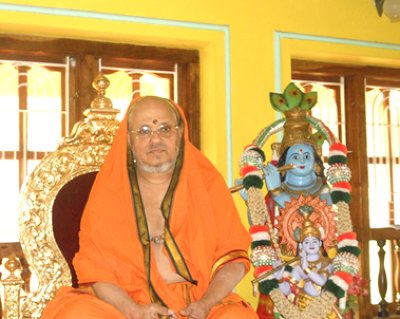
The head of the Edaneer Mutt in Kasargod, His Holiness Kesavananda Bharati Sripadagalvaru, passed away on Sunday morning (6th September 2020) in Mangalore at the age of 79. He may have left us today, but he will be remembered eternally as the savior of democracy in India. Swamiji mounted a challenge against the arbitrary actions of the Kerala Government's land reforms, leading to a historic decision in the history of Indian judiciary.
Background
Since the adoption of the Indian Constitution, there has been an intense debate on whether Parliament has the power to amend key features of the Constitution. Initially, the Supreme Court reposed faith in the leaders, giving Parliament the freedom to amend the Constitution.
However, as time progressed and new generations took over, members tried to exploit this power to suit their political interests. The debate intensified when the Supreme Court, in I.C. Golaknath and Ors. vs State of Punjab and Anrs. (1967), ruled that Parliament could not amend Fundamental Rights. This power was reserved only for the constituent assembly.
In reaction, then Prime Minister Indira Gandhi enacted major amendments to the Constitution—24th, 25th, 26th, and 29th—to overturn the Supreme Court's verdict. These amendments led to a fierce tussle between the judiciary and the legislature.
In RC Cooper v Union of India or Bank Nationalisation Case (1970), the 25th Amendment, which involved the nationalization of banks, was challenged. The apex court quashed Indira Gandhi's policy of nationalization. Similarly, in Madhavrao Scindia v. Union of India (1971), the abolition of the privy purse, introduced by the 26th Amendment, was struck down.
What was the Kesavananda Bharati Case?
The 29th Amendment (1972) and the 24th Amendment (1971) allowed the implementation of Directive Principles over Fundamental Rights and prevented judicial review. These amendments permitted governments to take over private property, even curbing Fundamental Rights.
The Kerala government, based on the 29th Amendment, imposed restrictions on the management of the property of the Edaneer Mutt. This led to a case filed by Kesavananda Bharati, challenging these actions as a violation of Fundamental Rights under Article 26, which concerns the right to manage religious property without government interference.
Judges and Verdict
Since the previous Golaknath case was decided by an 11-judge bench, a larger bench was required for the Kesavananda Bharati case. A 13-judge bench—the largest in Supreme Court history—was constituted. Nani Palkhivala, Fali Nariman, and Soli Sorabjee presented the case against the government.
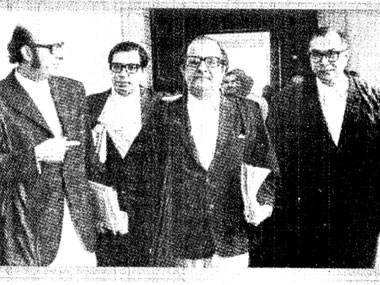
The judges were divided on ideological lines. The majority opinion, delivered by Chief Justice of India S M Sikri and Justices K S Hegde, A K Mukherjee, J M Shelat, A N Grover, P Jaganmohan Reddy, and H R Khanna, held that the "basic structure" of the Constitution cannot be amended by Parliament. Justices A N Ray, D G Palekar, K K Mathew, M H Beg, S N Dwivedi, and Y V Chandrachud dissented.
The Aftermath
The verdict, pronounced on 24th April 1973 after 68 working days of hearings, stated with a 7-6 majority that the basic structure of the Constitution is untouchable. The Court, however, did not explicitly define the basic structure. Over time, the Supreme Court has interpreted the basic structure to include the supremacy of the Constitution, rule of law, independence of the judiciary, separation of powers, federalism, secularism, a sovereign democratic republic, the parliamentary system, free and fair elections, and a welfare state.
After the verdict, Justice A N Ray, who dissented, was appointed as the 14th Chief Justice of India, superseding Justices Shelat, Grover, and Hegde. Attorney General Nitin De moved the Supreme Court to review the verdict, but the 13-judge bench ordered to review was dissolved.
In response to the verdict, Indira Gandhi's government enacted the controversial 42nd Amendment (1976), known as the "Mini Constitution," which had a profound impact on the Constitution, including adding the words "Socialist" and "Secular" to the Preamble.
Conclusion
Although the judgment was historical and landmark, Swamiji did not get any relief from the court as the amendments in the Kerala land reforms were upheld. Yet, his challenge was crucial in preserving the democratic foundation of India. Kesavananda Bharati will always be remembered for his role in this historic case.